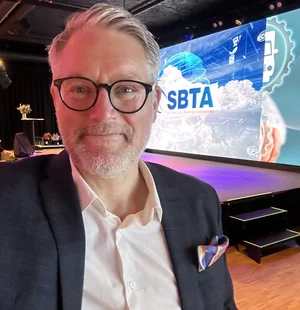
Business Travel Show Europe 2026: From booking to governance
The Business Travel Show Europe 2026 at ExCeL in London confirmed a clear evolution: business travel is no longer just about bookings, agreements and travel policies. The role of Travel Managers, Meetings Managers and Purchasing Organisations is rapidly expanding towards data, risk, compliance, sustainability, cost control, meetings and the traveller experience.
One of the strongest messages from London was about artificial intelligence. But perhaps even more so about leadership. For SBTA members, the conclusion is clear: the future of travel management is becoming increasingly strategic – but also more complex.
1. AI is changing business travel – but leadership determines value
AI was one of the clearest themes at this year's Business Travel Show Europe. The potential is huge in areas such as cost optimization, personalization, disruption management, duty of care, reporting and ESG monitoring.
At the same time, BTN Europe/Northstar’s reporting shows that many buyers are still cautious. Few organizations are yet to see fully measurable impacts at scale. The biggest issues are around data quality, transparency, information security, regulatory compliance and the need for human control in critical decisions.
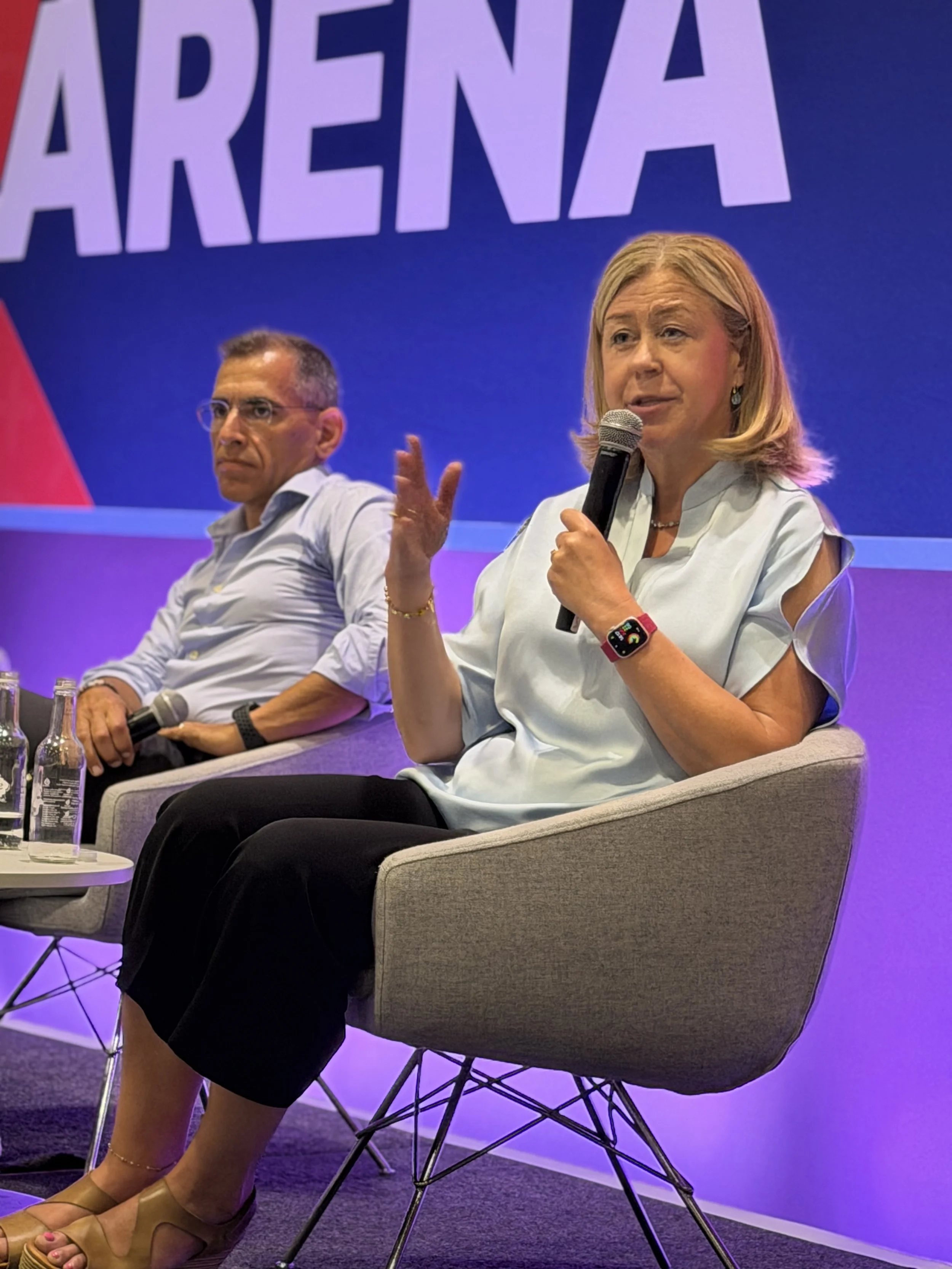
During the discussions, Mia Andersson from Scania Group highlighted an important insight that every Travel Manager should pause for:
“Real change requires the courage to recognize when one’s own
"the skills need to be supplemented"
Travel Managers are experts in business travel, policy, supplier management, traveler needs and business value. But AI, automation, data flows and new travel technologies have now become their own areas of expertise. To succeed, a combination of deep business travel expertise, technical expertise and clear strategic leadership is required. Mia also left the audience with another strong reflection:
“AI won't automatically make you more strategic.
Becoming more strategic is a decision you make every day.”
Technology can automate manual processes, streamline workflows, and strengthen policy compliance. But strategy, judgment, collaboration, and leadership are still human strengths. For SBTA members, this means that AI should be seen as a decision support tool—not a replacement for professional governance.
2. Practical AI wins over grand visions
The winner of the Business Travel Innovation Faceoff was Acai Travel, an AI solution that focuses on operational processes for TMCs, such as policy logic, rebooking, disruptions, unused tickets and complex service. The interesting thing is that the innovation was not about replacing travel agents or travel managers, but about streamlining parts of the work where time, precision and speed are crucial. The conclusion is that the most relevant AI solutions right now are those that solve concrete problems in everyday life.
3. Travel and meetings are growing together
One of the most important conclusions from BTN Europe/Northstar is that the line between travel management and meetings management continues to blur. A growing proportion of Travel Managers today also have responsibility for meetings, groups, events or parts of meetings spend. This is particularly relevant for Swedish organisations. Meetings, conferences and group travel often take place outside traditional travel programmes, which can create a lack of transparency in costs, risks, sustainability and contractual fidelity.
For SBTA members, the question is therefore not whether travel and meetings should be linked – but how it should be done in a controlled, relevant and business-driven way.
4. The biggest obstacle is not technology – but capacity and competence
Technology is evolving rapidly, but many organizations lack the resources, mandate and structure to fully embrace the opportunities. As Travel Managers take on more responsibilities – travel, meetings, risk, data, compliance, expense and sustainability – the need for clear roles, the right skills and internal support also increases.
“The future of travel management is therefore about
not about replacing humans with AI”
It’s about giving people better tools – and daring to build teams where the right skills are in the right place when the business changes. This is an important signal to management and purchasing organizations: a modern travel program requires more than technology. It requires governance, leadership and the courage to develop the organization.
SBTA conclusion
Business Travel Show Europe 2026 demonstrates that business travel is moving from administration to strategic governance. The successful organizations of the future will be those that can connect travel, meetings, risk, cost, data, technology and traveler experience into a cohesive program.
For Travel Managers, this means a clearer strategic role. For companies, it means increased responsibility to provide the right mandate, resources and expertise.
At SBTA | Swedish Business Travel Association, we are convinced that it is precisely these conversations that will shape the next generation of business travel and travel management. Our role will be to continue to bring the industry together, share knowledge and help members navigate this development – neutrally, relevantly and with a focus on business value, responsibility and sustainable travel.

STOCKHOLM 2026/06/29
Fredrik Hermelin
General Manager SBTA Swedish Business Travel Association